
How to Make Digital Employee Onboarding More Engaging Than In-Person
Uncover why digital onboarding often outperforms in-person—and how to build welcoming, engaging experiences that help new employees ramp faster.

Information overload doesn’t work
That first-day feeling—excitement mixed with overload. Your new hires know it well: rapid-fire introductions, dense slide decks, endless tool demonstrations, and a quiet pressure to signal, “I’ve got this.”
There’s a reason “onboarding overload” is a buzzword. Getting oriented often turns even the most experienced new employees into frenzied note-takers scrambling to keep up. A digital-first onboarding process can reduce that chaos with self-paced learning, just-in-time support, and live moments reserved for practice and reinforcement.
This article makes the case for digital employee onboarding and maps out concrete ways to boost engagement—so you can give every new hire a confidence-building path to productivity.
Key Takeaways
- Digital onboarding lowers overload, bakes in accessibility, and keeps knowledge consistent and searchable, so new employees ramp faster and engage more deeply than one-and-done live sessions.
- Reserve live training for nuanced coaching and practice, and round it out with accessible pre-reads, recordings, and job aids so your onboarding process delivers lasting results.
- Engage new hires digitally through paced onboarding tasks, human touches, interactivity, personalized journeys, and impact awareness.
The case for a digital onboarding process
Onboarding employees feels pretty straightforward. Gather everyone, cover the essentials, and answer questions. But reality is often messier. Scheduling issues, mismatched delivery styles, and retention can vary widely. A digital onboarding process delivered via e-learning can fix that. Here’s why:
- Lowers cognitive load. In-person employee onboarding sessions often cram a lot into a short window, which makes it hard for new hires to absorb everything. A digital onboarding process, in contrast, makes it easier to space information into smaller pieces that new employees can return to when needed.
- Self-paced learning. An in-person facilitator sets the pace, leaving some learners scrambling to keep up and others waiting for more. Digital tools give employees control to pause, rewind, and move forward at their own pace.
- Inclusive by design. In-person sessions can be tough for people with different processing needs or anxiety about group settings. A digital employee onboarding experience lets new team members engage in a space where they feel comfortable, with built-in supports like captions, transcripts, alt text, zoomable text, and keyboard navigation.
- Consistency at scale. In a traditional onboarding process, quality depends on the instructor. Digital delivery standardizes the foundation so that every new team member receives the same primary knowledge.
- Searchable and reusable. People rarely retain all the details from training after just one day. Digital resources remain available as a searchable “source of truth” whenever questions arise.
- Built-in analytics. Beyond surveys and Q&A, in-person offers little analytical insight. Digital onboarding tools give richer data—marking where learners pause, skip, or revisit—so the employee onboarding process improves with every new hire.

When should training be live?
Traditional live-time onboarding still has its place, but it doesn’t have to be the primary delivery method. Use it where human interaction truly changes onboarding outcomes. For example, in-person is great for building trust, practicing workflows after digital training, and discussing nuanced judgment calls with managers.
Pair live moments with a digital component in your onboarding process so memorability and equitable access don’t become secondary. While some companies use dedicated employee onboarding software, many rely on flexible e-learning tools that support onboarding and other ongoing training needs.
For example, use digital tools to create a short pre-training course and follow up with a microlesson to reinforce key points. You can also share presentation materials in advance, record and caption sessions for replay, and hold office hours so learning continues after the meeting.
How to design engaging digital onboarding experiences
A successful onboarding experience feels personal and useful in the moments people need help. Use these strategies to build an engaging process:
1. Distribute onboarding content slowly
One of the biggest onboarding mistakes is giving new employees everything all at once. Even in digital onboarding, too much information on day one is hard to retain. Instead, break down the onboarding process into small, actionable steps.
- Before day one: Send light welcome materials.
- First week: Cover the essentials like tools, logins, who’s who, and workflows.
- Later weeks: Add deeper training once new hires have had time to settle in.
2. Add human elements to onboarding to increase connections
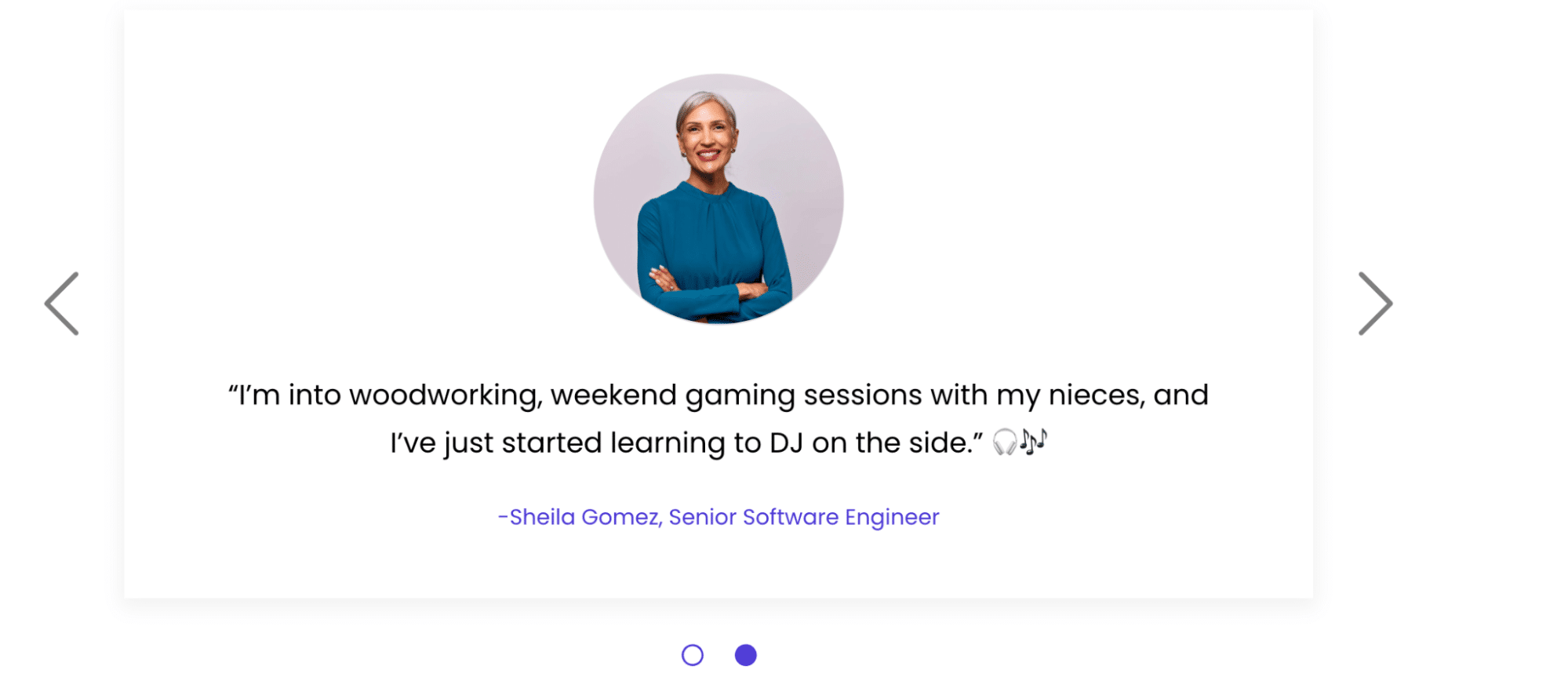
People connect when they get to know the person behind the title. Add small touches to your digital onboarding—like short videos where teammates share what they do, what they enjoy outside of work, or tips they wish they’d had as new hires.
Even thirty seconds of genuine personality goes a long way toward making new employees feel welcomed and engaged.
3. Build interactive experiences that spark curiosity
Static slides are easy to skim and forget, but activities invite people to participate. For example, you might incorporate:
- Interactive choose-your-own scenarios. Try a short activity in which a new hire decides how to respond to a situation—like handling a customer email—and then experiences the direct consequences of their choice. For scenario-building tips, check out this piece: Build Scenarios For Different Experience Levels.
- Click-and-reveal interactions. Let learners click on parts of the screen—like buttons, images, or icons—to uncover information at their own pace. This makes them active participants in discovering the material.
- Simulated practice. Give new employees a safe space to try new tools and processes. For example, guide them through a mock workflow where they can practice steps, make small mistakes, and get no-pressure corrections.
4. Personalize the employee onboarding journey
One of the most significant advantages of digital onboarding is that it doesn’t have to be the same for everyone. Digital delivery makes it possible to tailor the experience so that each new hire feels as if the program was designed for them. Here’s how:
- Let people choose their path. Provide optional modules or “choose-your-own” navigation so new hires can focus on what matters most to them.
- Adapt to their pace. Add checkpoints where employees can test their knowledge and skip ahead or dive deeper.
- Respect different needs. Offer language options, accessibility features, and alternative formats—like transcripts, captions, audio versions, and simplified layouts—so everyone can engage comfortably.
When onboarding adapts to each person instead of asking everyone to conform to the same pace and format, it feels more like an investment in them.
5. Connect learning to outcomes after onboarding
New employees are most engaged when they understand how their role contributes to something bigger. That means showing the “why” behind tasks. A few practical approaches include:
- Share employee success stories. You might explain how one well-handled support ticket led to a renewed client contract, or how an efficient safety check prevented a serious issue.
- Explain the “why.” Connect training materials to the impact instead of just listing rules or steps. Explain how following a process reduces mistakes, speeds up production, or makes customer experiences smoother. That way, people understand the reason behind the policy.
- Link training to growth. Find moments throughout onboarding to connect what people are learning with how it supports their future. For example, you might explain how understanding the company’s project system lays the groundwork for leading larger initiatives later.
Employees are more invested when they understand how everyday choices shape career growth and business outcomes. That awareness builds early employee engagement and lays the groundwork for long-term motivation.
Setting new employees up for success
The first days on a job set the tone for everything that follows. A digital approach gives you the tools to make early days engaging, supportive, and memorable, helping new hires build confidence and connections that last well beyond onboarding.
With thoughtfully paced content, human touches, interactive moments, personalized journeys, and a connection between daily work and bigger outcomes, you can design an onboarding process that truly drives employee engagement.
Want more strategies? Download our free guide, The Future of Employee Onboarding, for deeper insights and practical examples.
You may also like
5 Common E-Learning Challenges and How to Solve Them
Need help implementing your e-learning program? Learn how to tackle top challenges with practical solutions to make your training program successful.
New Articulate Features and Updates: Q3 2026
ICYMI: Get all the details on Articulate’s newest feature releases and biggest update in more than a decade.
Articulate 360 AI Now Publishes Directly to Thinkific
Articulate announced a new Thinkific integration. Here’s what that means for customers of both companies.