
What Is Multimodal Learning? Engaging Every Learner
Explore the benefits of multimodal learning, and discover classroom and workplace strategies to engage every learning style effectively.
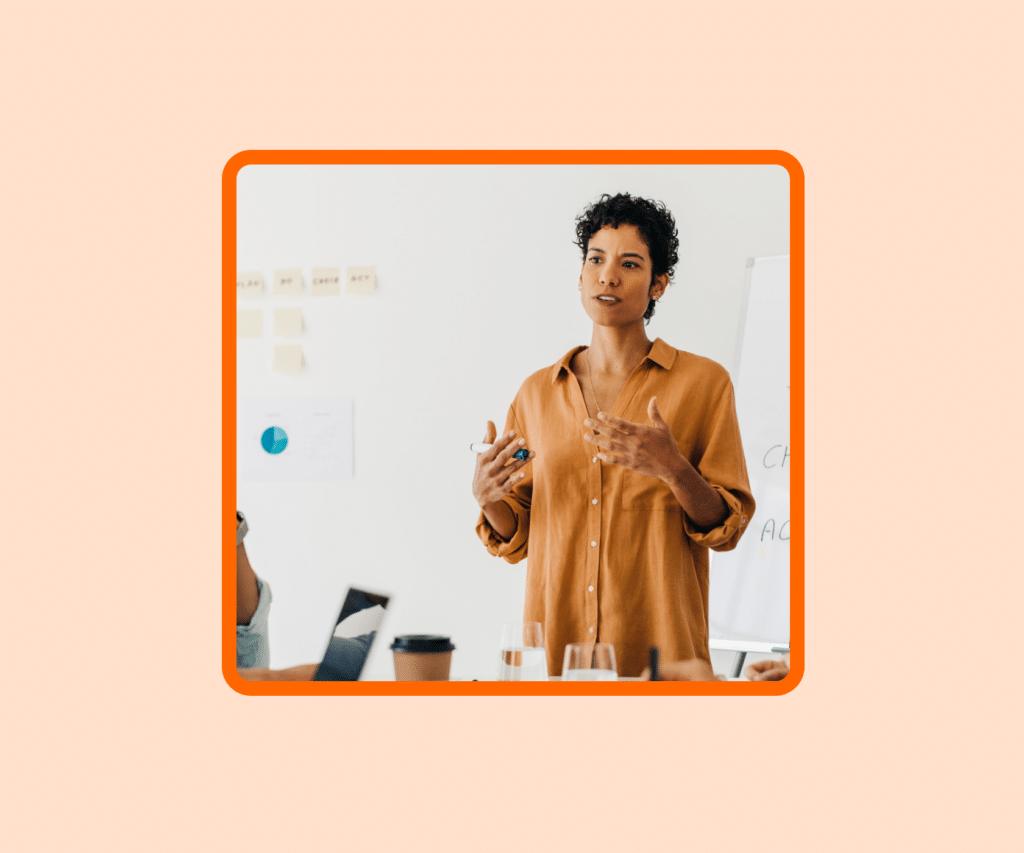
An instructional method to engage all learner types
As a student, my most difficult subject was always math. The seemingly concrete nature of numbers dissolved into confused abstraction the moment I tried turning over a problem in my head, like trying to piece together a dream after waking up. But, if I was provided with a visual and written example, I could identify predictable patterns and more easily apply what I’d learned.
I was no genius, but even then I knew that being told how to do something was not nearly as effective as being told and shown how to do something. Even better than that? Being able to then apply that knowledge myself through hands-on practice.
Luckily, all of my teachers used a variety of instructional methods to engage their learners, not just auditory lectures. This instructional method, called multimodal learning, uses a combination of visual, auditory, reading and writing, and kinesthetic strategies to cater to a variety of learner needs and preferences.
In this post, we’ll discuss the benefits of multimodal learning, break down the VARK framework which informs it, and discuss classroom strategies to help engage every learning style effectively.
Key Takeaways
- Multimodal learning is an instructional method that engages a variety of learning styles to increase retention and comprehension.
- While the VARK model identifies four individual learning types: visual, auditory, read/write, and kinesthetic, most people self-assess as having a multimodal preference (e.g., visual + auditory or kinesthetic + auditory).
- E-learning platforms can successfully integrate multimodal learning through a combination of video, textual material, scenario-based modules, and hands-on virtual simulations.
Understanding multimodal learning
To understand why multimodal learning is an effective instructional method, it’s important to understand the different ways knowledge is distributed. Think of our five senses: hearing, vision, touch, taste, and smell. Now think of how you prefer to learn. Is it easiest for you to retain information after hearing it, seeing it, or getting hands-on experience?
While answers may vary depending upon the learner, most of us are truly engaged in learning when more than one sensory channel is used to relay information. We may hear information first, see the same information in written form second, encounter a visual demonstration third, and then finally apply what we’ve learned using our own hands.
This method of engaging a variety of sensory channels ensures quicker and deeper understanding, improving knowledge retention. It also takes a significant burden off of the instructor. After introducing a topic and providing sufficient examples, teachers can turn learning over to the students as they engage in hands-on practice, discussion, roleplay, or other social learning activities.
The different learning modalities
The four different learning modalities connect to the various sensory channels we use to take in information. Read on for examples of learning content within each specific modality.
- Visual. Charts, infographics, diagrams, and any other visual content fall into this modality.
- Auditory. Any example of instructional method relying on hearing falls into this modality, like lectures, discussions, and podcasts.
- Reading/Writing. Taking notes, writing reflective journal entries, and taking written assessments fall into the reading and writing modality.
- Kinesthetic. Any practical or hands-on approach to learning falls within this modality, like interactive roleplay and lab experiments.
The VARK framework explained
The VARK model, developed by an educator from New Zealand named Neil Fleming, identifies four learner types—visual, auditory, reading/writing, and kinesthetic. The basic suggestion of the model is that learners have a preferred method of taking in and processing new information.
In theory, this data would help teachers match instruction to their students’ learner types, increasing engagement and enhancing learning outcomes. Though appealing, the reality is that studies have not been able to confirm the connection, with Fleming himself noting that VARK gets more attention than it warrants.
In reality, research-backed instructional techniques like spaced repetition and retrieval practice are more effective than matching teaching methods to learning styles. In other words, instructional strategy matters more than the style.
Still, the VARK model is seen as a practical guide for educators as it serves as a basic reminder that there are many different ways to engage learners. Understanding each learning style individually can help educators successfully blend them to reach more students.
VARK learning styles in detail
With the understanding that no learner matches completely to a single learning style, let’s take a look at each one individually to gain a better understanding of learning preferences under the VARK model.
1. Visual learners (V)
Visual learners are best at processing information that they can see. This means that charts, diagrams, graphs, pictures, and step-by-step demonstrations are particularly effective for them. Video—although a mix of visual and auditory methods—is also effective for visual learners.
Text-based explanations and lengthy lectures can be challenging for visual learners, so it’s best to add pictures or imagery to help them retain information. Imagine, for example, that you’ve never seen or heard of a platypus. A text-only explanation of its anatomy—without a diagram or image to accompany it—may read more like an entry out of a mythical creature encyclopedia.
2. Auditory learners (A)
Auditory learners learn best from hearing information verbally. Unlike our visual learners, they’re able to soak up knowledge through traditional lectures, presentations, and in-class discussions, but lengthy written materials might be a challenge for them.
Because they’re best tuned to retain information that they hear, their learning environment would ideally be set up to avoid noisy interruptions and other auditory distractions.
3. Read/write learners (R)
Read and write learners thrive best on text-based instruction presented through textbooks, articles, written instructions, and note-taking. While a lecture-based class may not be ideal, if a read/write learner is allowed to take notes or read provided notes as they listen, they’ll be in better shape.
These learners have excellent reading comprehension, are able to compile their thoughts into structured notes, and communicate effectively through writing.
4. Kinesthetic learners (K)
Kinesthetic learners prefer to go straight to hands-on activities. As long as their bodies are involved, they’re more likely to retain information. Movement activities, experiments, role-playing scenarios, simulations, and games are best for this learner type.
As expected, long periods of stationary learning—often involved in lecture-based environments—present a great challenge for kinesthetic learners.

Why multimodal learning matters in 2026
Multimodal learning suggests that a comprehensive approach to instruction—one that uses a combination of visual, auditory, read/write, and kinesthetic channels—is best for learners. And learners tend to agree. Since the VARK model’s inception in the late 1980s, over one million students have taken the assessment aimed at defining their learning preferences. Here are the results:
- Visual preference: 1.9%
- Auditory preference: 5.7%
- Read/write preference: 3.3%
- Kinesthetic preference: 23.2%
- Multimodal preference: 66%
Among the four individual learning styles, strictly kinesthetic learners outnumber strictly visual, auditory, or read/write learners. This shouldn’t be surprising, considering the general agreement among educators that students learn best through experience. The outright winner, though, is a multimodal preference, proving that a combination of at least two sensory channels is best.
The digital transformation
The digital transformation has brought virtual reality (VR), augmented reality (AR), gamification, and mobile learning to the classroom and the workplace. This infusion of technology ensures the levels of engagement, retention, and comprehension that are normally expected in hands-on, experiential learning environments.
AI has enhanced adaptive learning platforms, which are able to shift and change content based on learner preferences and performance. As AI becomes more responsive to learners, this may even lead to adaptive content that caters to multimodal learning preferences.
Multimodality in e-learning platforms
E-learning platforms allow instructional designers to cater to multimodal learners. Many basic e-learning modules begin with a short video (visual + auditory), then follow up with written materials (read/write) while others employ scenario-based modules that combine text, audio, and video.
Advanced e-learning modules use simulations where learners make choices, manipulate virtual objects, and receive instant feedback. This essentially replicates the hands-on experience, but has the advantage of taking place in a safe, virtual environment.
Most e-learning modules finish with an interactive assessment—whether through drag-and-drop interactions, recorded presentations, or oral submissions—allowing learners a variety of ways to prove their knowledge.
Practical strategies for implementing multimodal learning
Blending teaching instruction with visual, auditory, read/write, and kinesthetic modalities is simple. In fact, most educators are probably already doing so. Even the simplest PowerPoint presentation is a combination of visual and auditory teaching styles.
But providing even more variety in instructional methods—with careful intention—should be every educator’s goal, whether you’re teaching students in a classroom or building a soft skills e-learning course for your employees.
Let’s take a look at some basic classroom and e-learning strategies to help you cover each learning style.
Strategies for each learning style
- Techniques for auditory learners include recorded lectures, in-person or online discussion forums, or short microlearning podcasts.
- Tools for visual learners include whiteboard presentations, step-by-step instructional videos, and interactive infographics.
- Approaches for kinesthetic learners include virtual labs and simulations, historical role-play, and station-based learning.
- Methods for reading/writing learners include worksheets, research, and essay writing.
Examples of multimodal learning in action
Here are some more in-depth examples of multimodal learning in action.
Case-based learning
Both students and employees appreciate knowing that what they’re learning will be applicable to their real life. Case-based learning does just that by using real-life examples to introduce a concept. Think of how law students study and discuss actual cases, or how a sales training module might begin with statistics related to the importance of active listening.
Starting off your course or lesson with a real-life example proves that the effort to attain the knowledge is worth the result, motivating learners to engage with the content.
Multimedia research projects
Multimedia research projects ask students to use a variety of sources such as books, podcasts, news articles, videos, and more. This multimodal approach not only exposes students to a wider range of sources and perspectives, but caters to learning styles with a multimodal preference.
Educational games and gamification
The oldest educational game I can remember playing on the family computer is Reader Rabbit’s Interactive Reading Journey. Like the gamified learning modules of today’s digital classroom and workplace, it combined learning with gaming mechanics like time constraints, narrative storytelling, points, and leaderboards.
Immersing students in an interactive—and competitive—virtual environment drives engagement, and has been particularly successful in engaging frontline manufacturing workers.
Think-Pair-Share
Think-Pair-Share is most likely one of the first, simplest, and most effective instructional strategies that all educators learn and use. Here’s what it’s like in action:
- Think. After briefly introducing a concept, instructors ask learners to think about it on their own, writing down general thoughts or recording answers to a few questions on a worksheet.
- Pair. When learners have had a sufficient amount of time to think about the concept or question on their own, they turn to a person nearby and discuss their thoughts.
- Share. Once learners have discussed their thoughts with one other person, the instructor can either put them into small groups to continue sharing their thoughts or open it up to whole group discussion.
Along the way, nearly every learning style is accommodated, as learners first have to read and write and then trade off speaking and listening. By the end of the activity, each learner is exposed to several different perspectives, either confirming, shifting, or completely changing their original opinion.
Multimodal learning: Established in the past, built for the future
The multimodal approach to education uses a variety of content modes to make courses more engaging, improve comprehension, and enhance retention. Its ability to cater to diverse learners and learning styles makes it ideal for any learning environment, in-person, blended, or fully online. Educators should aim to blend multiple modalities—visual, auditory, text-based, and kinesthetic—for maximum learning impact.
Check out how the University of Kentucky College of Nursing’s e-learning empowers instructors to build highly engaging, multimodal learning modules that engage students with real-world situations. Ready to create your own multimodal learning? Start your free trial of the Articulate 360 platform today.
You may also like
How to Create Effective AI Prompts that Generate Tangible Results
Learn how to write an effective AI prompt that generates relevant, useful responses, and explore helpful examples, tips, and the pros and cons of AI writing.

Articuland Is Back in 2026
Articuland is back and headed to Orlando. Join curious learning enthusiasts like you for two days of learning innovation, practical ideas, and community.
Translation Validation Tips When You Don’t Have a Professional Validator
Our translation validation tips provide free ways to ensure accurate and relevant translations for when you don’t have access to a professional validator.