What is the role of the instructional designer? And how do I convey that to my clients and subject matter experts?
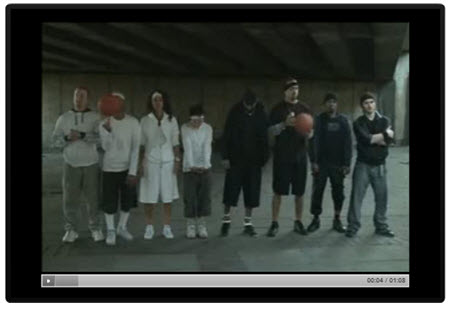
As I was contemplating a response, I stumbled upon this video that does a great job illustrating the value of instructional design. Watch the video first and then I’ve got a few observations. If you don’t have access to YouTube, click the link below the video.
As humans, we’re wired to learn and we’re always learning. There’s really not a time where we’re not learning. Learning is just what we do. And we have a natural way of learning that is not dependent on taking a formal course.
Learning happens through our experiences and through the things we see and hear. We learn in our quiet moments as we reflect on life. And we learn in our social interactions and conversations with others. And sometimes we even learn through elearning courses.
A formal course intrudes on the learner’s natural learning path. This intrusion is neither good nor bad. Essentially, we’re just circumventing the natural learning process by not waiting for the learner to stumble upon what we need them to know or do. So we manufacture a learning experience. And in that sense, the role of the instructional designer is to help the learners make sense of the new information they get.
The video above is an excellent illustration of some key points concerning instructional design. Imagine the video was the content of an elearning course. There’s a lot of information and a lot going. If you sat the learner down in front of the video and offered no guidance, who knows what they’d focus on?
Some might try to understand the big picture and spend time figuring out where they’re at and why they’re in two teams. Some might just observe the basketball skills. Still others might try to pick up clues listening in on the conversations.
There’s a lot going on and if you just left it up to the learner to figure out, you’d waste a lot of time and probably won’t get the results you need. So, instructional design is more than just an information dump. Instead it’s about helping the learners make sense of the information.
Fortunately, as you watch the video, the narrator does offer some guidance. He provides a basic objective: “This is an awareness test.” And he gives some direction to look for passes by the team in white. That’s easy enough to do.
For the moment, let’s discount the bear and just look at what happened. There’s so much activity and information that without clear instructions you’d focus on the wrong things. Because he gives clear instructions, you’re able to answer his question. In fact, while the moonwalking bear is obviously intended to catch you off guard, the reality is that the clarity of the instructions helped you see past the bear and focus on the goal of counting the passes. You were able to do what he asked despite the distractions of all of the other activity.
And that’s one of the critical pieces of instructional design. Because you’re manufacturing a learning experience, you don’t want the learners focused on twenty things. Instead, you’re trying to get them focused on very specific pieces of information.
Now let’s flip it around a little. Admit it. Unless you already saw this video, it was kind of shocking to think that something as obvious as a moonwalking bear could have passed before your eyes with you completely unaware.
There’s a lesson in there for us all. We can become so intently focused on our perspective that we miss the “moonwalking bear.” This is true of our clients, our managers, our subject matter experts, and even us. We don’t know what we don’t know.
This is why collaboration and good analysis comes in handy. It helps expose us to multiple perspectives and keeps us from counting passes, when the critical information is walking right passed us. And we’re able to pass that on to our learners.
Make a mental list of everything that is going on in the scene. How many people are there? How many teams? What type of ball? What are the people saying? What is the ethnic makeup of the people? Is that a police siren or ambulance? Which team has the best ball handling skills? The list could go on. And as you can see, there’s really a lot of information to collect and process.
Without instructional design, the learner might or might not get the information they need. Because of instructional design, you can get the learners to cut through a lot of extraneous information and get right to the important stuff.
What you do as an instructional designer is take the information and expertise of a tenured subject matter expert and deliver it to the learner. And in doing so, you compress the learning process saving time and money.
Now let’s look at the video in its entirety. It’s clever. I’ve watched it a few times and I’ve shared it with others. I’ve reflected on how to use the video as an illustration for this post. I’ve also used it in conversations with my kids and some friends. So the video makers have done a great job engaging me.
There something for us to learn here: good design engages us. When we’re mentally engaged, we’re more apt to remember and learn. And as you can see from the video, it’s not interactive. Yet it is effective.
Not all of our content can be cleverly packaged like this video. In fact, most people would rather have clarity than cleverness to start. And that is the first step in engaging your learners. The information needs to be clear and have real meaning and purpose for the learners. Once they understand why it’s important to them, they’ll be more apt to have a meaningful learning experience.
Learning is a complex process and there’s a lot more to be said about instructional design. The key point is that instructional designers provide value when they’re able to pull the content together to craft courses that are focused and meaningful. What do you think? Feel free to add your ideas by clicking on the comments link.
66 responses to “What Everybody Ought to Know About Instructional Design”
The video example is really good. I did miss out the bear the first time i viewed the video. Anyway, i found the bear when the “propmt” mentioned it.
This video is an example to show how objectives alone are not sufficient in a course. Even though the initial focus is provided by the objectives, every page should have meaningful prompts and directions such as – “Click here to view the germination demo” or “Mouse-over the accounts form to know the key parameters” etc.
Typically, in a problem-based learning scenario or case study there are a lot of graphic and text components in a single page. The instructional design should clearly lay down the purpose of the case study, how to go about accessing and using every componenet of the case study, and also provide adequate feedback.
The efforts put in while storyboarding reach the learner only if the learner is properly guided through each page or screen of the course. Ofcourse, you need to take care that you do not overdo the directions stuff and hence design appropriately. I feel this is more important or as important as the help/demo that teaches you how to navigate the course layout/menu!!!
Wow! This is really a very interesting article about what is Instructional Design and yes I loved the video and your observations on it.
You have loads and loads of information on the web. Yet an e-learning course does make a difference by specifically focusing on what the learner wants to learn and by helping the learner learn in a way he or she wants to.
Unless and until the learner makes sense of the information you give in an e-learning course, there is no meaning to the course at all.
[...] Instructional Design – An Interesting Read Posted on July 22, 2008 by Rupa I just read an excellent post by Tom Kuhlmann on the value of Instructional [...]
I’ve never liked when a course begins with “The objectives for this course are X, Y, and Z.” I guess as a learner I don’t like to feel like I’m being led by the nose – I consider myself a semi-intelligent adult, after all. If the content is designed correctly, the objectives should become obvious.
Or am I violating some carved-in-granite instructional design commandment by not wanting to spell out the course objectives?
As always, great stuff Tom. I’m embarassed (but happy…considering it validates my job!) to say that I missed the bear not only the first time through, but the second time through….I was so focused on the damn ball!
Hi everyone!
I had seen the video before. My 12 year old kid had shown it to me!
The moment I saw it I realised its power as an educational tool (I am a teacher). In fact, you made very good use of it to get your message across!
However, I tend to disagree with my colleague’s comment on being “led by the nose” when course objectives are made explicit to the learner. We must bear in mind that not all learners will be able to realize what our instructional objetives are so easily. I teach online an even when things are made explicit, they write to me asking the “silliest” questions you can imagine!
I believe setting the objectives help you (the designer) and the learner see what you want to achieve by the end of the course. Besides, it is an element that helps you decide on taking up a course or not. It is the first thing I look for: what am I going to learn here?
If the objectives meet my expectations, I go on.
So far, the posts here have!
Regards,
Doris Soares-Brazil
Super post, Tom.
The gamelike video is a great example of the power of interactivity. I don’t remember the last time I watched a youtube video all the way through, much less watching it a second time. But you had me willingly rewinding and re-viewing with this one.
Also, I loved the way you role-modelled good instructional design in this post. You caught my attention, motivated me to learn, positioned my thinking, provided good content, then debriefed it and gave me a number of ways to apply it. Beautiful.
I remember once hearing that setting the stage for a learning experience is like creating an all-you-can-eat buffet. Different learners will gravitate to different types of foods, some will like the pastas, others will prefer the fish. The designer needs to make sure its available for them (or they won’t be interested in going to the table) and to not also over-do it.
I think, the difficulty that I’ve found in e-learning is how to create that buffet without too much information, slides are too busy, or like Anitha said – avoid the “click here to see…” buttons.
This article you wrote opens the doors to a whole new buffet dinner using audio, video and animation (flash).
I think there’s at least one other way in which instructional design adds value. Compare what we do the what an investigative reporter does: we go out there and gather information that might not otherwise be available to the learner. You might compare us to the reporters who venture into war zones, or have access to “unnamed sources” at high levels of government.
In some cases, the learner just doesn’t have the ability to tap into the same sources we have. For example, suppose you were asked to interview a Subject Matter Expert about a highly complex, new process. That SME wouldn’t have the time to talk with every individual who needs to be trained. And, more than likely, the SME wouldn’t have the skills to explain it clearly to every kind of learner!
So I’d add, “Instructional Design provides access to information that the learner might not otherwise encounter.”
Hi Tom,
Thanks for this great post!
I saw this video last year on a conference. 300 teachers, a huge screeen… nobody saw the moonwalker bear!
Greetings from Uruguay!
I’m glad you like the video. It’s very powerful and short. Which is probably another point.
I really appreciate all of the insight and great comments and feedback.
@Mark: I missed the bear the second time because I figured they put it in on the edges. I definitely didn’t expect something so obvious.
@Chris: I agree…somewhat. Objectives are critical in the sense that the learner needs to understand what this is supposed to accomplish. However, that doesn’t mean that objectives need to be laid out as a series of bullet points or the standard, “at the end of this course you will….”
@Rissa: Good point. That’s kind of what I was getting at with the time compression. If you followed a process where you allowed the learner to “discover” information in a more natural manner they might not get what they need (your point) or it might take forever for them to get there. Thus, ID helps compress that time and guides the learner to discovery.
This was definitely a great video – both on its on and as a way to illustrate the point about the role of ID. Just as the bear was unexpected, this isn’t the type of video I expected when Tom said it illustrates the ID role. So, I was immmediately hooked into the video itself, while also wondering what the heck this has to do with instructional design. Subsequently, it made the points of the post clear. And started an engaging conversation. That is darn good design!
I have to disagree with you Tom. The video is exactly the wrong approach to learning. It is an overused ‘gotcha’ trick. I’ve seen one similar for business strategy.
To satisfy the unstated objective, the viewer has to likely fail the stated objective. One question, one objective only.
I still don’t really know the message the video is trying to convey.
You’re awesome! Once again, what a wonderful article. I’m going to print this information out and use it as a checklist. My experience as an Instructional Designer (6 years) is I always have to remind some clients what the purpose of an Instructional Designer is. I believe the role oftentimes gets confuse with the following: Content Developer, Learning Development Support Specialist, Instructional Development Specialist and etc. Instructional Designer’s (as you mentioned) “help learners make sense of new information”. Therefore, IDs come with specific skill set such as: understanding of the ADDIE module, how to write objectives, how to chuck content for learning, how to conduct a needs assessments, how to design evaluation tools how to develop instructional strategies and more.
My question is, how do you articulate(briefly) this to a client who may confuse the role with Course Developer? Please share (anyone).
Chris, I agree that as a learner, focusing on objectives gets things started on a “lead them by the nose” approach. But I find many learners (Jeff, above, you may be one of them!) can’t jumpstart their attention without seeing them.
In trainings, I show objectives, but don’t speak to them directly.
However, objectives are CRITICAL for discussing content with the learners’ managers. That’s what they care about, above all else.
I half agree with you. It’s a gimmick. But I do think that there is a point there that can be extrapolated into our craft space. And that point is that most human beings, when challenged and focused, will not notice anything peripheral to that goal.
The converse application of this observation is that if you don’t provide focus or a goal, then the activity is pretty much a waste of time and the human won’t notice anything at all.
So there’s a balance. And the ISD’s job is to strike that balance between focus (and how tight that focus is) and providing supporting information to meet the goals.
I tend to believe that we over process, over structure, analyze, and formalize our real goals (human goals) nearly into oblivion. The establishment of a three part objective clearly articulates ‘a’ goal. But, I often question the methods and roads we take to arrive at these blessed three part artifacts. Have we assembled something that fits the academic model just to completely drop the essence of what’s really important? And are people not sophisticated enough to draw their own conclusions about the goal with a high rate of accuracy without a lab perfect objective statement?
I believe there’s a way to have your cake and eat it too. I am a HUGE fan of performance narrative setup. Leading off with a real world challenge, story, question. Putting the learner in a ’solve’ mode up front. I like to use this type of Objective setup with a natural / simple language ‘you’ll know what to do in this situation when you get this lesson wrapped up’.
I also understand that there are more types of folks than I in this world and some appreciate (in their own misguided way:)) the establishment of a clinical objective in bullet style just like every goofy course they’ve ever taken. There is no reason that the learner can’t have access to both.
In fact, having some way to access the strength of objective completion as gaged by the learning product at any time in the experience would be nearly perfect. An objectives menu item, button, or pull-out that shows what the objectives are. Or a simple printed handout for reference as the learner takes the course would suffice (the computer makes great checkmarks, but given a pencil – so do I).
I have been working with educational objectives for most of my life and after 84 years am finding the least gobbledegook in your latest blog. I am persuaded that someday in the future teachers can become obsolete and more and more excellent material will be available online. At best the teacher will only be a guider.
Thanks ever so much for the blogs and posts.
I am currently trying to convert some of the lectures given to our Master Gardeners to a concentrated “Powerpoint course” available to anyone who wants to learn,
thanks again,
+ Yes, I am 84 years old and still able to do things that are worthwhile.
Ruth
Great article, Tom. That was an excellent way to model using a novel or unique activity to gain learner attention.
Here is a response to Kathie’s question, “how do you articulate(briefly) this to a client who may confuse the role with Course Developer?”
In my experience (depending upon job roles), the Course Developer decides WHAT will be studied while the Instructional Designer determines HOW to go about studying that material. The ID does all the things you mentioned, while working closely with the Course Developer to ensure everything is being covered to the appropriate extent.
Another terrific post. That was a great way to simply explain what Instructional Designers do. I may have to quote you on a few things in my design plan documents! Thanks.
Great stuff. This is the first time that I have seen this video and yes I missed the bear. I even rewound the video to prove it was actually there the first time. I completely get that your points on instructional design have nothing to do with the gimmick of the video but with providing instruction for the learner and that it is really easy to miss an objective if it is “unstated” (Jeff). For someone as new as me to learning generally this has provided further insights into how best to design and create my courses.
Great post and a very good learning experiance too. Instructional Designing is not a subject taught in any University in India but many are trying to be IDs here through learning from these types of blogs. If Ruth is 84 , I am 70 and I always look forward to learn from your posting Tom. Thanks lot.
I liked the video and the post. I wish that I had a video like that to use in all of my courses. I successfully counted the number of passes by the white team and missed the bear. I did have to go back to prove to myself that it was the same video both times. I decided to listed again to the sounds and missed the dancing bear again.
I think that sometimes student feel they already know everything they need to know and that the course is just a waste of time. Being able to begin with a video like this could make the student more receptive because they may realize they don’t know everything. But you need to be careful. Just as a few people said it was just a trick, some students may be turned off from the training. I have seen students become more concerned with finding the spelling and grammar mistakes in a course than reviewing the actual content.
Help the student focus on the right content. Don’t let them become distracted by extra details they don’t need to know in order to be successful. Your courses will be more successful when you can attract and keep the student engaged.
Terrific article, Tom — excellent points and superb example. Thanks! I do, however, have a nitpick disagreement with one point you made. You say that the video is not interactive. But you’re defining “interactivity” too narrowly. Actually, the video is highly interactive. Interactivity isn’t limited to mouse-clicks or keyboard usage. By asking the viewer to count the number of passes made by the team in white, the video essentially demands a high degree of user engagement and mental activity. The viewer must do something more than merely watch. One might call it “passive interaction” (if I may coin a seemingly oxymoronic term), but it’s interaction nonetheless.
@Wayne: Good point about the interactivity. I should have been more clear. Essentially, I meant that you didn’t have to build a bunch of click and drag interactivity or the type of interactivity we typically look for in an elearning course. I actually wrote a post on passive engagement that speaks to your point.
Tom – As always, great material! I’ve forwarded the Blog link to many of my authors.
I’ll echo Chris’s comments about course objectives. They need to be known (and followed!) by the course developers. Students who know them can use them to decide if the course that will meet their needs – so course objectives are important to students for different reasons than they are important to course developers.
I feel that objectives ought to be part of the course catalog description, rather than part of the class material itself, but the published objectives should be exactly what was laid out for the course developers – no more, no less.
But then, the moon walking bear is the “NICE TO KNOW” info.It is always there floating about around us but we do not tend to look at it.
Say, the atomic structure.
You start with the history of the discovery of the Atomic structure, the initial work , the experiments and the inferences.
We deliver the goods.Fine.
I prefer to look at this moon walking bear as the contemporary advances I’d expect my students to look for, beyond the objectives speified.
The AFM (Atomic Force Microscope),an innovative tool for the nanoscience Research,actually gives us the picture of an atom just by one glance through it.
This would motivate them to excel.
We only need to point at this moonwalking bear
Your video is one real tool for me to let my student know his /her duty also to look beyond the objectives set by the instructor.
What is the role of the instructional designer and why have one on board?
This is a question that seems to come back at regular intervals. Here’s my attempt at an answer.
Few managers would seriously consider letting someone from accounting design the new computer network for their company. Fewer and fewer car owners repair their own cars: they prefer trusting a specialist for that. Most of us rely on an architect rather than a dentist to design a new home. So why are managers often content to let someone other than a specialist handle instructional design?
Two basic reasons come to mind. First, managers typically don’t understand what learning involves, i.e. how it happens and how best to support it (you don’t learn this during your MBA…). Nor do they understand the impact of good or bad training on the organization. Managers not held accountable for how they handle training will likely continue using quick fixes.
Second, workplace learning is still dominated by the myth that subject matter experts can best handle instructional design even though in many cases that’s like getting the accountant to set up the computer network. As long as instructional design is associated with content selection rather than problem solving, managers will continnue to rely on subject matter experts.
Here’s what I believe is an instructional designer: someone who through education and practical experience has developed the ability to investigate situations, understand problems and identify solutions that stress effectiveness and efficiency (for the organization and for learners). It is the person that sets directions and finds how best to utilize resources to achieve meaningful, and measurable, results. Instructional designers help ensure problems involving human learning are correctly solved the first time around.
This leads to what may be the most basic questions we should ask ourselves: how many instructional designers truly see themselves, and understand their role, as problem solvers? How mnany can explain that to management? If you can comfortably answer these questions, you may be well on your way to showing your organization what is the true value of an instructional designer.
I think the underlying issue is that a lot of folks don’t have much respect for our profession as they feel they can do it better, or feel they have the qualifications. And for good reason – we tend to forget that, unlike any other profession, ours is one in which our students have been subject to YEARS of observation of it in practice. Now, before I get flamed – yes, I know and believe there is a distinct difference between the garbage teaching methods I (and I suspect most of you) were subjected to in elementary, seconday, and undergraduate classes. But our trainees think a teacher is a teacher. And a teacher to them is only as credible as their perceived knowledge.
If you were stuck for 7+ hours a day sitting in a chair watching computer programmers program, you’d probably feel like you were an expert on the subject too after listening to it for 16 years or so.
So…what point am I making? Simply this – I believe this is the reason we have to justify our roles to other employees. 99% of their ‘training’ has been lecture, so what skills exactly do we bring? 99% of our cohorts are still lecturing away in their ILT ‘designs’, so what exactly differentiates us from the old-timer without training experience but who is a decent speaker and writing skills, who is asked to be the instructional designer and trainer? I can think of one major difference: he’s probably had years of on-the-job experience in the subject matter, so he’ll have instant credibility. The cards are stacked against us from the start : )
I agree with Mark that our customers feel (sometimes wrongly so, other times not) they are qualified to denigrate our work. That said, we haven’t done ourselves any favors by churning out a *lot* of horrible eLearning over the years.
Yes, I had some bad instructors in public school and in college. But I learned far more from the *good* instructors I had than I’ve gotten from 99% of the eLearning I’ve been subjected to.
The only way we can change minds is with our products. Until we can excite them about online learning with the quality of our products, they will continue to perceive that we offer nothing of value to them. And rightfully so.
And I’m sad to say, based on my own experience as a learner, that being professionally trained as an instructional designer in no way assures a worthwhile eLearning product.
Chris and Mark point out issues that have been in my mind as well.
***COMING TO THE DEFENSE OF THE OLD THING***
There is the comparison that denigrates the ‘new kid on the block’ by comparing it blindly with what came before. In this comparison, we tend to forget about the misgivings preceding intervention.
How common is this example. A four day resident training course is attended five times a year by ten students per class. 4×5x10 = 200 students annually. The pent up demand for some of the competencies in this course (revealed through analysis) is ten times this number. There isn’t budget for the additional quotas. More investigation of the resident course reveals that the extent of the evaluation is level 1. Quiz results aren’t recorded, though there is a brief 15 minute lab activity that gates completion. Noone ever fails the course. The analysis reveals that 60% of the students like the course because (1) the instructor is entertaining (2) it allows them a short period to escape work (3) it provides an opportunity for them to connect with peers that they don’t normally connect with. The other 40% of the students think the training was a waste of time.
There is so much evidence there that we are looking at an imperfect existing solution. But when folks mention displacing the existing solution with eLearning the force fields go up to protect the old one. This is a tame example, I’ve seen plenty where there is evidence that the existing solution is horrid and simply doesn’t meet the goals of the program – yet there are plenty of folks that will stand up and bash in a proposed replacement with a solid business case.
Chris’ comment about a good instructor being pure magic is spot on. That’s the essence of the argument about the quality of the learning experience. We aren’t talking about anything new with the new medium. The same comparisons can be made in every domain of solution type.
***SME’s CAN’T DO IT, ISD’s CAN’T DO IT WITHOUT THEM***
There are a LOT of pieces to most of these puzzles we attack and attempt to solve. These details require pretty specialized input and the application of pretty specialized skills if we are to have any expectation of precision and success. It takes both a subject matter expert and an expert in instructional systems (someone who knows how to build the paths and establish the guide methods). Most ISD’s I know will spend a lot of time attempting to become SME’s on certain systems and performances. There is a degree of this that is critical. On the other hand, in many cases, it might be impossible for the designer to gain the level of competence required to make a worthwhile product.
I sat down with an ISD nearly ten years ago and sketched out a concept for a tool that would empower SME’s to build and maintain their own content. The response I received was ‘That’ll never work’. I think we are evolving, the pendulum is swinging towards the end of the SME taking on some of these tasks.
To me, it’s a matter of balancing risk. The risk of making the SME completely reliant on outside services to update content is that the content will rot on the vine and eventually grow out of use. The flip side of that is that organizations will have such a backlog of maintenance requirements that they will never catch up – and this has the same results.
If we attempt to design a product independant of the SME, without making the SME an integral part of EVERY stage we risk pushing out something that is out of touch.
If we attempt to design a product that doesn’t investigate beyond the SME, we risk overfeeding our learners with things that they really don’t need to know.
And then there are the creative output risks. Put tools in the hands of those who don’t know how to use them, folks will take a really long time to accomplish tasks that specialists can do much faster with a higher quality output. Tools like Articulate remove some of those risks – sure you can still screw up the navigation styles. But those things are set and modular. Tools that remove risks are the stage we are developing to.
The next stage, IMO, are tools that help the instructional systems types get it right more often. Assistants that help organize, structure, and constantly evaluate activities and content have to be the next wave of enablers. The rapid eLearning trend seems to me to be nothing more than a streamlining of processes. We have categorized it as a type of output that’s the wrong way to view it in my opinion.
There are a lot of gapped areas in the process. But it takes all kinds, and without that balance there is little hope of success.
[...] quote from the latest article, titled What Everybody Ought to Know About Instructional Design: So, instructional design is more than just an information dump.
I like the video . I was counting the the way the ball was pass. I think that the way they were dress, the color has something to do with it to.Focus in color is a way to grab attention.The human being has sense very well define.5 that most of us don’t use as we should,The thinking has to be use all ways and has to be motivate by other input. Every body has different kind of knowledge. The problem stand , how this knowledge will reinforce what we already have o don’t have?In what way this will help me ? You are right the learning has to be motivate with our daily life.
This blog is absolutely great, and I gravitated towards this particular post as I am getting ready to start my Master’s in Education in Instructional Design. I’m really looking forward to starting the program and this blog will definitely help give me tips along the way.
Excellent content and presentation of the point, I agree with the most comments…
But here is something that I still don’t understand: what about the impacts of a particular subject matter, and contents selected, prepared and revised accordingly by a content developer, as I understood his role, to the principles of instructional design?
And what about mutual interaction and communication among the trinity of a content developer, an instructional designer and a subject matter expert, if principles of instructional design are dependent on (in some extent are specific to) a particular subject being taught (I think they are)?
Then, how much should an instructional designer be a subject matter expert to design instruction efficiently (to choose proper learning activities and methods and to extract the most relevant pieces of information on a subject to make learning easier to learners, for instance)?
And if he should be a subject matter expert in a considerable extent (I think he should), how would he be instructed on the particular subject matter by a recognized subject matter or by anyone else?
Thus the whole eLearning development process seems to be doable as an one-man project only (Mr Know-All himself only!)
Perhaps instead of answering each question, one (preferably Tom in one of the next blog topics) could give an illustrative case-study on an example of a course designed on the specific subject matter, following the whole course design process, how all people having these three roles cooperate together, what exactly each one should do and how he/she provides the skills needed, emphasizing the specifics of their mutual communication during the course design process…
Thank you all in advance for your kindness in posting responses.
I attended a workshop where i saw this video and I really liked it. And i liked the way you have explained what is ID. However i would like to know what do you have to say about Jeff’s comments.
@Atul: On the surface I don’t agree with Jeff. However, in fairness it is a quick comment where he doesn’t get to fully explain his position. I think that the video is a clever way to remind people that you don’t always see what you see, which makes sense for the context of watching riders.
I think Jeff does bring up a good point about cleverness over clarity. The goal isn’t to be clever or deliver a “gotcha” moment.
i am just about to finish my graduation & i wish to get into this field.however i had very little knowledge about it.but the video & the blog was a great help. i want to know where can i study this course. thanks.
I enjoyed this article. I’m looking for more information related to posting these types of videos. Information on file size, type, pixels etc. Can you provide additional information on posting or embedding a youtube video?
Most of what I learned about the art of instructional design, I learned in the first 3 years.
Most of what I do, I’ve done many times before.
What everyone ought to know is that there are many barriers to actual performance improvement. Breakin down these barriers is extremely hard.
Very few clients I’ve had over the years actually attempt to induce behavior changes in their charges. There are too many reasons for this to even go into, but the end result is that most training follows the Push model Tom covered in another post. Designers, their clients, and their managers follows this model like sheep.
I’ve found it ironic but also instructive that in 20 years, I’ve never been encouraged by my employers to actually “take” any training myself, except for a Flash course. After 4 days of training by an inexperienced instructor, my company was $750 poorer and for the most part, I lost 4 evenings that could have been spent doing something productive or just enjoying family time.
Some clients insist that I participate in their current classes before redesigning their courses, but for the most part, I’m expected to immerse myself in the content, become competent in the skills if possible, then translate that to designing the training events.
I long to break out of this mold and I think eventually we will. I think we will see break-throughs in multimedia enhanced on-line reference systems. Some current models include You Tube, Wikipedia, and How Stuff Works. I currently rely heavily on these resources when doing research for the next project.
I want to be able to go a web site and find the information I want almost immediately. When I find it, I would love to see good illustrations, animations or video that explain key concepts.
Since I will probably not retain the information very long, I need to be able to go back, find it again quickly, and then apply it to whatever task I’m doing.
We have a long way to go to make this happen. Operating systems, search engines, and content organization models are still in their infancy from a usability standpoint.
I see a day where actual “training” events hardly happen at all.
I was convinced there wasn’t even a bear there the first time around. I went back to be sure you didn’t try to fool us. LOL! I was so convinced you tried to trick us that it was a joke. I guess it’s all true.
Dennis
The video and text is a good example of the strengths of learning objectives and instructional design. I believe for some learners learning objectives can have the opposite effect. If a learner believes the learning objective is too hard for them or worthless, then learning objectives can get in the way. With these types of unmotivated learners, the job of the instructional designer becomes even more important.
Hi Tom,
Great article, however, I feel interactivity is a very broad term and can’t be used just to describe your mouse movements. Can we have something on interactivity?
I am especially fond of one of your descriptions of Instructional Design as a professional whom “creates a manufactured learning experience” inclusive of our natural learning abilities. I agree that we are here “to help e learners make sense of what they are learning”. While watching the video I found myself struggling to watch the white teams passes when the bear caught my attention. What happened next speaks volumes. I intentionally ignored this added stimuli in order to “focus”. Therefore I find with e learning concentration is also manufactured by the directions given, by getting learners to focus on specific information.
By providing “context and perspective we compress learning time and bypass” erroneous information and hopefully provide focused goal oriented learning. Also, you add to the ability for the student to retrieve information, through concentrated referencing students can index situations that are relative to the lesson and apply it.
Instructional Designers have to engage or immerse students in the subject matter relatively quickly and easily. Here is when clear objectives should be stated and the directions with the video should have included in addition to counting the number of passes made by the white team to look for anything that does not belong. Blog author Cammy Bean http://cammybean.kineo.com/2007/08/getting-started-in-instructional-design.html also discusses effective engagement of e learners. Another blog by Clive Sheppard http://www.kineolearning.com/60minutemasters/ offers its reader another site where you can register and find tools for creating stunning and effective e lessons. I requested membership and took the tour. Would you recommend ID professionals use this site? I found loads of useful tools and templates to choose from and it was all for free.
Since we all aim to be the best Instructional Designers we can be in our field I stumbled onto a website http://www.wikieducator.org/CF5:How_Do_We_Design_Inspiring_Online_Vocational_Courses%3F which I found useful for ID students which lists principles for creating focused yet engaging material. I especially enjoyed principle number 5 their description of e learning establishing a strong foundation having each lesson act as “scaffolding to support and guide learners through their learning experience”. What are your thoughts?
Well, I viewed it, my younger son viewed it – (same response as everyone here) and then older son came home from school, watched it and said ‘13 – but what was that thing moving across the screen?
It is true, everyone does have a capacity to learn, however, most people seem to want to learn things that either interest them or their brain is “wired” toward. For example, some people have a greater capacity to learn mathematics while others may be inclined towards social studies. The person who has a difficult time learning math will usually tend to not have a great interest in the subject no matter how much they are “instructed.” In your article, you mentioned that as an instructional designer, we are to take the important stuff, ‘the big picture’ so to speak, and in doing so, “time and money” are saved. However, sometimes a learner might get tripped up with the ’small stuff;’ the devil might be in the detail. If this happens, more time and money will either end up getting spent or wasted. It is important to know what the learners are looking for and to spend time on their concerns as they crop up. I would say, start with the big picture but pay close attention to the small stuff.
@Joseph: thanks for the comment. The challenge with ID is being a bridge that takes a client’s goals and creates a learning process relevant to the learner. In many ways, the course is an intrusion on the learner’s “natural” learning process.
66
comments